The import of lacquerware to Europe from the Far East, that emerged at the end of Louis XIV's reign, strongly influenced 16th century decorative arts. Fascination and growing demand, as well expensiveness and poor quality of lacquer produced in Japan during the latter part of the 17th century, led European craftsmen to develop a trend for copying Asian lacquer. This interest prompted the establishment of varnisher's shops in Paris as Europeans decided to delve into this craft themselves.
Amongst the most famous of these varnisher's were the Martin brothers of Paris whose name became associated with their varnishing technique Vernis Martin (Martin varnish) which was produced in France and is said to have been made by blending green varnish and bronze/gold powder with heating oil and copal ( a resin that was sourced from an exotic tree from South America) and then adding Venetian turpentine.
Guillaume and Etienne-Simon Martin created beautiful varnished pieces to which they would lend their name. Sadly, however, their names were eventually attached to lesser quality projects "in the style of" that they had no involvement in. Today in order see fine examples of the Martin Brothers Venis Martin pieces one must visit a museum.
I hope you enjoy the lovely images featuring the Vernis Martin finish as well as information about this historical style of lacquered French furniture.
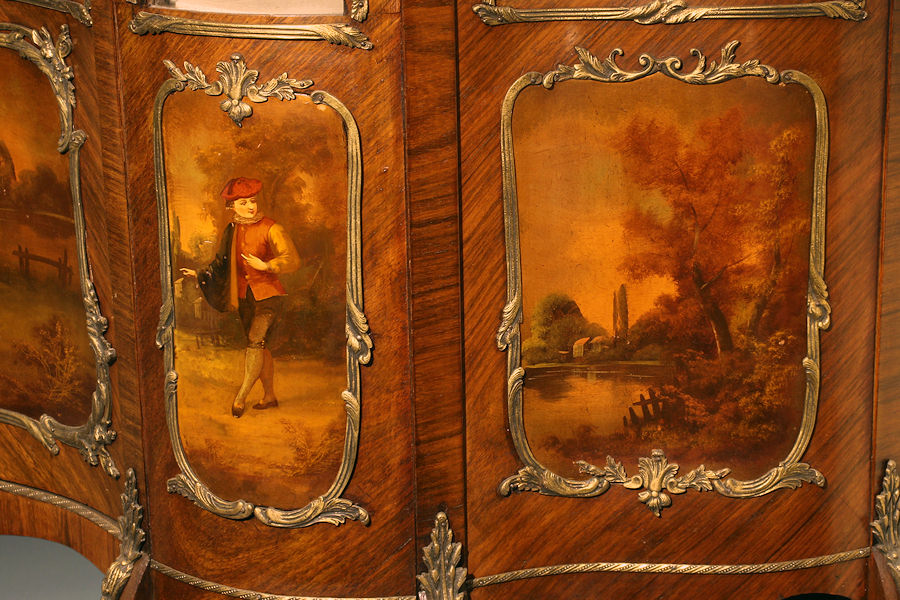
Vernis Martin is a synonym for French lacquer art of the eighteenth century. Easily recognized, this iconic style became the standard for excellence for finishing beautiful furniture of the era.
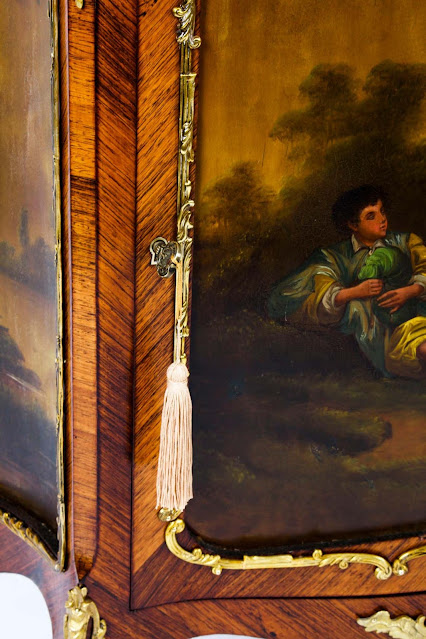
One of the details of French Vernis Martin lacquer was the introduction of new colors and how it could be applied on all kinds of objects from furniture......

to modes of transportation such as Vernis Martin sedan chairs......

and carriages.

The Martin brothers lacquer was also well known for the creation of stunning personal items like this French Vernis Martin gentleman's snuff box from the late 18th century.

Guillaume Martin in 1730 was given a patent to protect his particular recipe for this shiny, transparent, liquid coating substance made of copal resin. At the height of their fame the brothers directed at least three factories in Paris, and in 1748 they were all classed together as a “Manufacture Nationale".

Two things were responsible for the popularity of Vernis Martin lacquer. Their technique was less costly plus the finish was less brittle and did not crack as easily. The Martin brothers secret formula gave the lacquer a somewhat elastic quality.

This is why the Vernis Martin laquer was the finish of choice for the furniture of the Louis XV period which was characterized by curved forms. It performed so well on the curvature of bombe chests and vitrines.

The Vernis Martin method of layering paint and varnish to get a depth of image for decorative objects made it much in demand. One of the most noted collectors of Vernis Martin pieces was the Duc d'Orléans.

Vernis Martin is known for it's beautiful sheen and translucency.

There was a time when the best hotels in Paris were filled with beautiful pieces from the Martin factories. Sadly they have vanished and now you can only find them in museums.

A piece like this would have been favored by Marie-Antoinette. To experience the Vernis Martin decorative style you might want to plan a visit to Versailles where there are a few pieces from from large wall panels to small vanity items.

A Louis XV bronze mounted, Vernis Martin style marble topped cabinet featuring a large beautiful panel depicting a shepherd courting scene.

Another element associated with Vernis Martin style furniture is the panel formed in the shape of a cartouche enclosed within ormolu mounted frame as seen here on this Louis XVI Style French rosewood, marquetry & ormolu Vernis Martin escritoire.
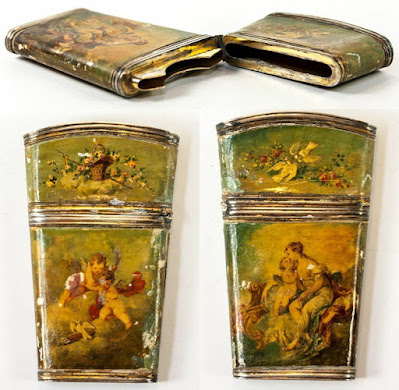
The Martins started by producing small furniture and personal items like toilet and vanity necessities such as hand mirrors, brushes, boxes and cases of all shapes and sizes. They established their reputation because of the varnish they applied which was considered the pinnacle of refinement of the French art of the 18th century.

They truly excelled in the field of small luxury objects like this Vernis Martin Billet-Doux (love note) case.

The Brisé fan was also popular. Here is a beautiful sample with it's ivory sticks painted and varnished in "vernis martin" showing nobility in a rural scene.

Even though their production was widely diverse, it was mainly composed of the small merchandise such as this charming mid nineteenth century lacquered French case.
Alain.R.Truong - WordPress.com
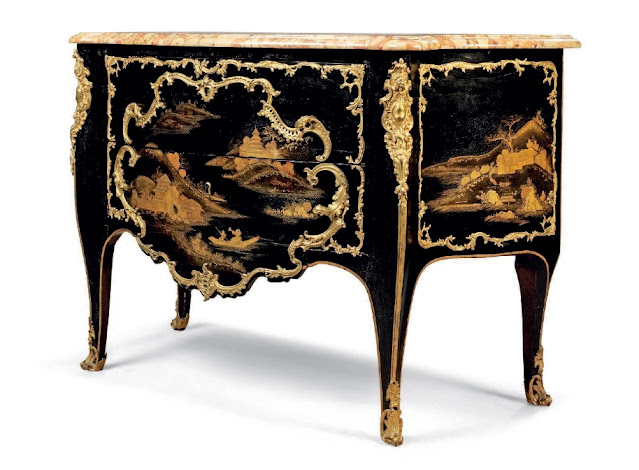
A Louis XV ,circa 1740 ormolu-mounted black and gilt Vernis Martin commode.
By the 18th century the popularity for chinoiserie was immense but only the aristocrats could own original East Asian furnishings. The Vernis Martin technique made it more affordable to the less wealthy.

The Martin brothers, with their superior lacquer, helped spread the passion for the Chinese like style across Europe.

Eventually however the Martin Brothers turned their attention toward oil painting and broke away from East Asian lacquer style.The most famous painter of the time, François Boucher, was responsible for depicting courting scenes which were becoming hugely popular in France. The furniture panels were decorated with eighteenth-century lovers and idyllic landscapes and then varnished with Vernis Martin.

A Stunning Louis XV style gilt bronze mounted Vernis Martin ladies secretaire cabinet by Paul Sormani.

Another beautiful Vernis Martin piece is this French vitrine from the Napoleon III period. It is decorated with Rococo scenes and florals.

From the French word for glass 'vitre' we get the vitrine cabinet of French origin. A way to display articles such as china, objets d'art, these pieces featured a glass center door and side panels usually with a mirrored back making it easy to view the collection.

They were introduced in a low key way in 18th century France and became popular in the 19th and early 20th centuries. The vitrine is what people usually associate Vernis Martin decorative style with.

They are often embellished with ormolu mounts and painted and lacquered with the Vernis Martin technique. The style was copied in England in the late 19th century when the Louis XV style was in vogue.

I can imagine how stunning these pieces would have been before they darkened with age as most varnishes do.

A great example of a Louis XV revival Vernis Martin painted and lacquered vitrine display cabinet.

These vitrines were very popular during the first quarter of the 20th century when the interior decorating style was French.

The Vernis Martin style vitrine could come in many shapes, sizes and designs. Many styles have a pierced brass gallery.

Louis XV revival Vernis Martin style vitrines can still be found by "treasure hunters" at reasonable prices.

I love this small Vernis Martin French bombe shaped commode/chest. The top depicts the typical lovers while the front (and I bet the sides) are decorated with further painted and varnished Vernis Martin detail.


Vernis Martin style was very much a part of the Romantic era, which was an artistic, literary, and musical movement that originated in Europe towards the end of the 18th century peaking between the years 1800 and 1850. There were so many lovely items to be considered, petit tables......

even chairs,

and beds.

The Vernis Martin lacquered clocks were especially beautiful!

The Vernis Martin technique remained in use until the end of the century when it was replaced by a new industrial process.

The purpose of this blog is to inform you about this style antique so if you are fortunate enough to stumble upon a fabulous Vernis Martin piece at estate sale prices you will know what you are looking at. Happy treasure hunting!!
Click below to see the previous blog post.
This blog post was published by Lisa Farmer
In the event that I have not credited the correct source of an image, please contact me at lisafarmerdesigns46@yahoo.com and I will be glad to correct it.